Asphalt construction Deepening

In this training course, you will gain in-depth insights into asphalt types according to current regulations and learn about the intended use and the possibilities of additives.

Only 299,00 €

(zzgl. 19% MwSt.)

This training is only available as a single license for 14 days

Asphalt construction Deepening

Experience asphalt paving on the construction site

Our in-depth course is aimed at users who already have experience with asphalt paving. After you have already acquired all the basic knowledge in our seminar on the basics of asphalt construction, you will now learn about special aspects that you will encounter again and again in your everyday work on the construction site.

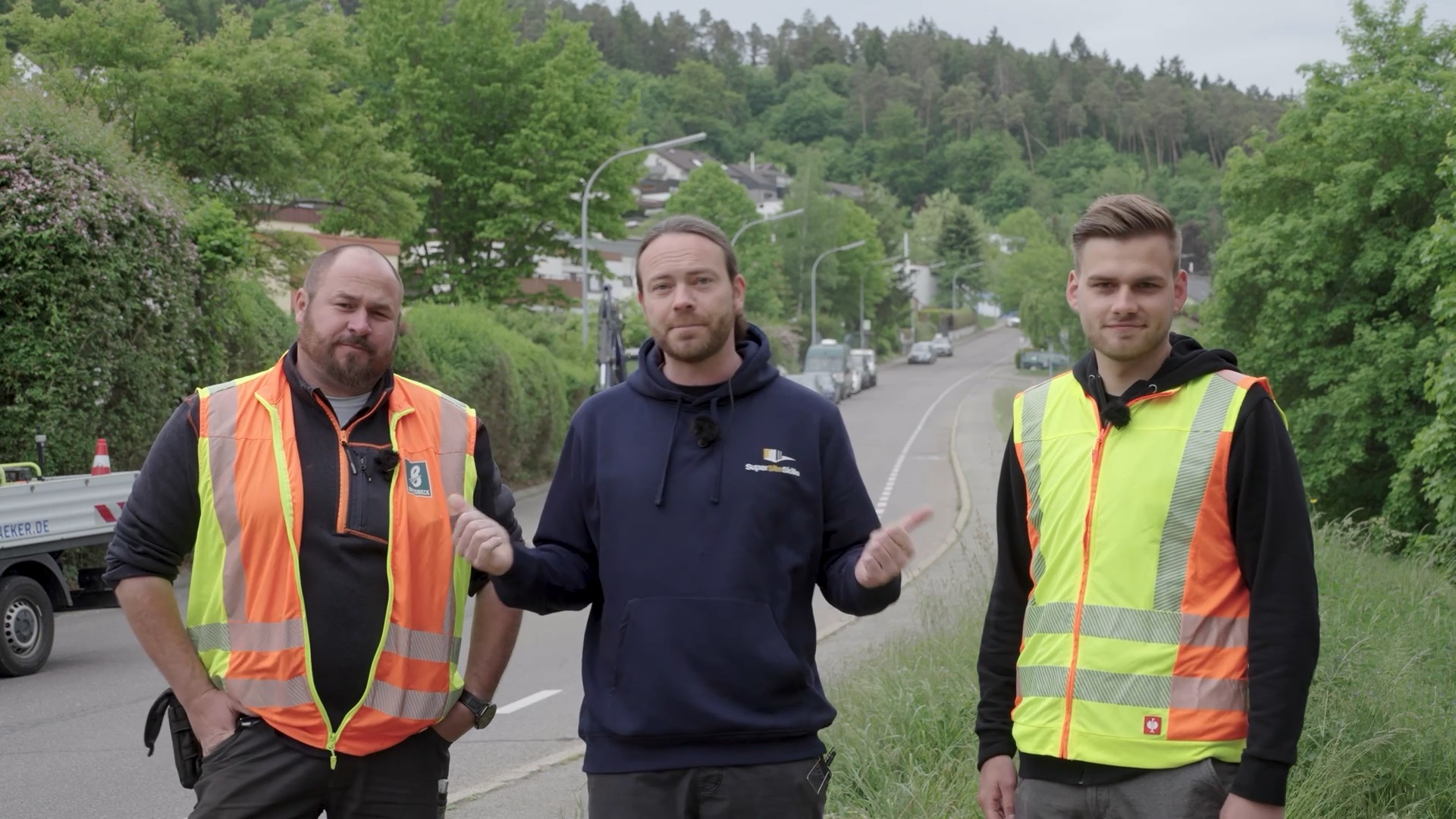
We are particularly pleased to welcome two renowned experts as guests for this training course. Both will share their extensive experience from their respective specialisms with you.
Sebastian Miesem from FAME will tell you everything you need to know about the future of asphalt paving. Bernhard Süss from AMA Asphaltmischanlagenservice GmbH, on the other hand, will give you an insight into the various methods for testing and ensuring the quality of bitumen and answer typical user questions.

Learn step by step from the experts!

The course offers you interactive modules on construction site preparation, machine technology and quality assurance – all virtual, practical and accessible at any time.
0:00
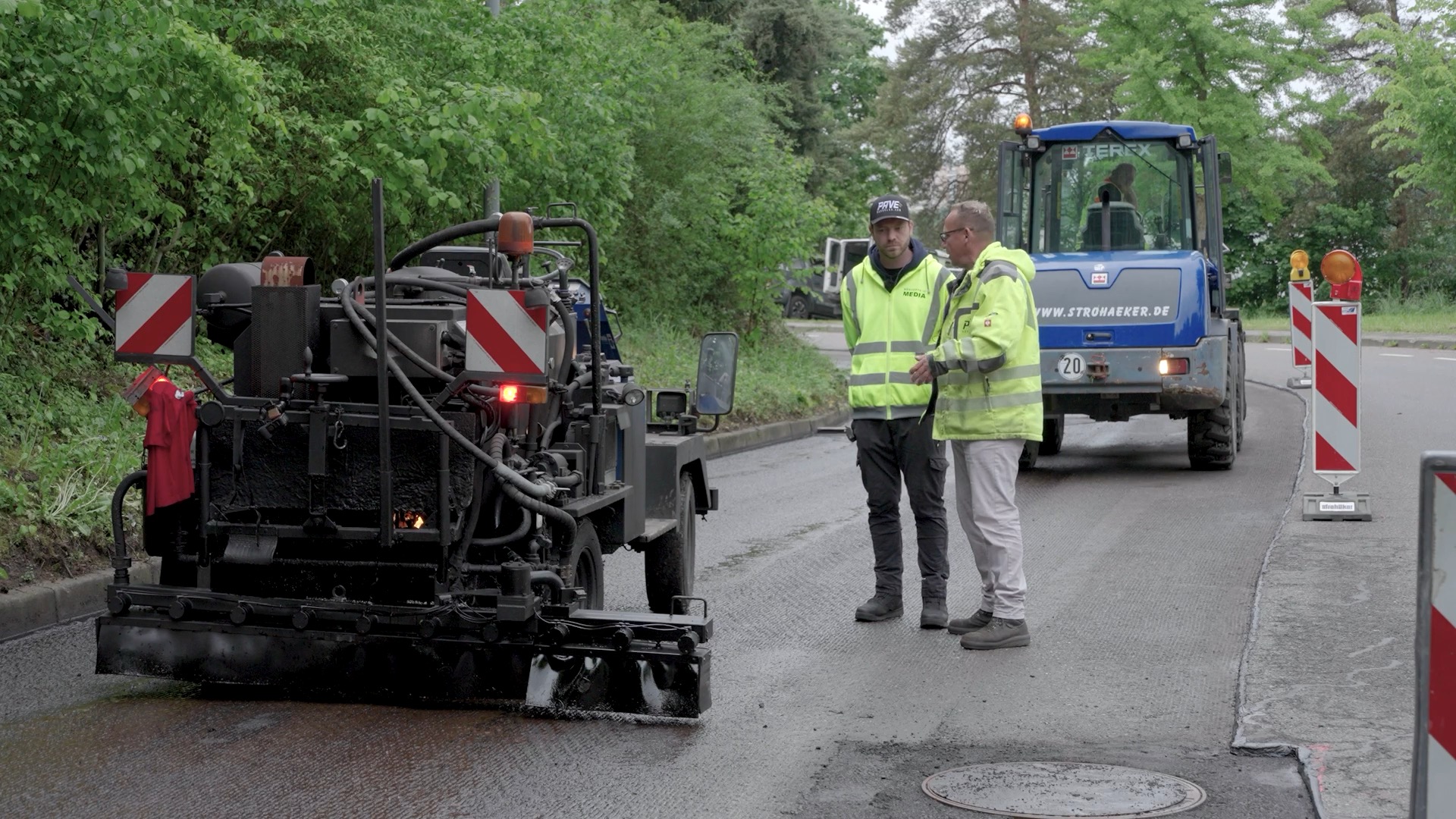
Working with the spray trolley

Procedure for applying the adhesive

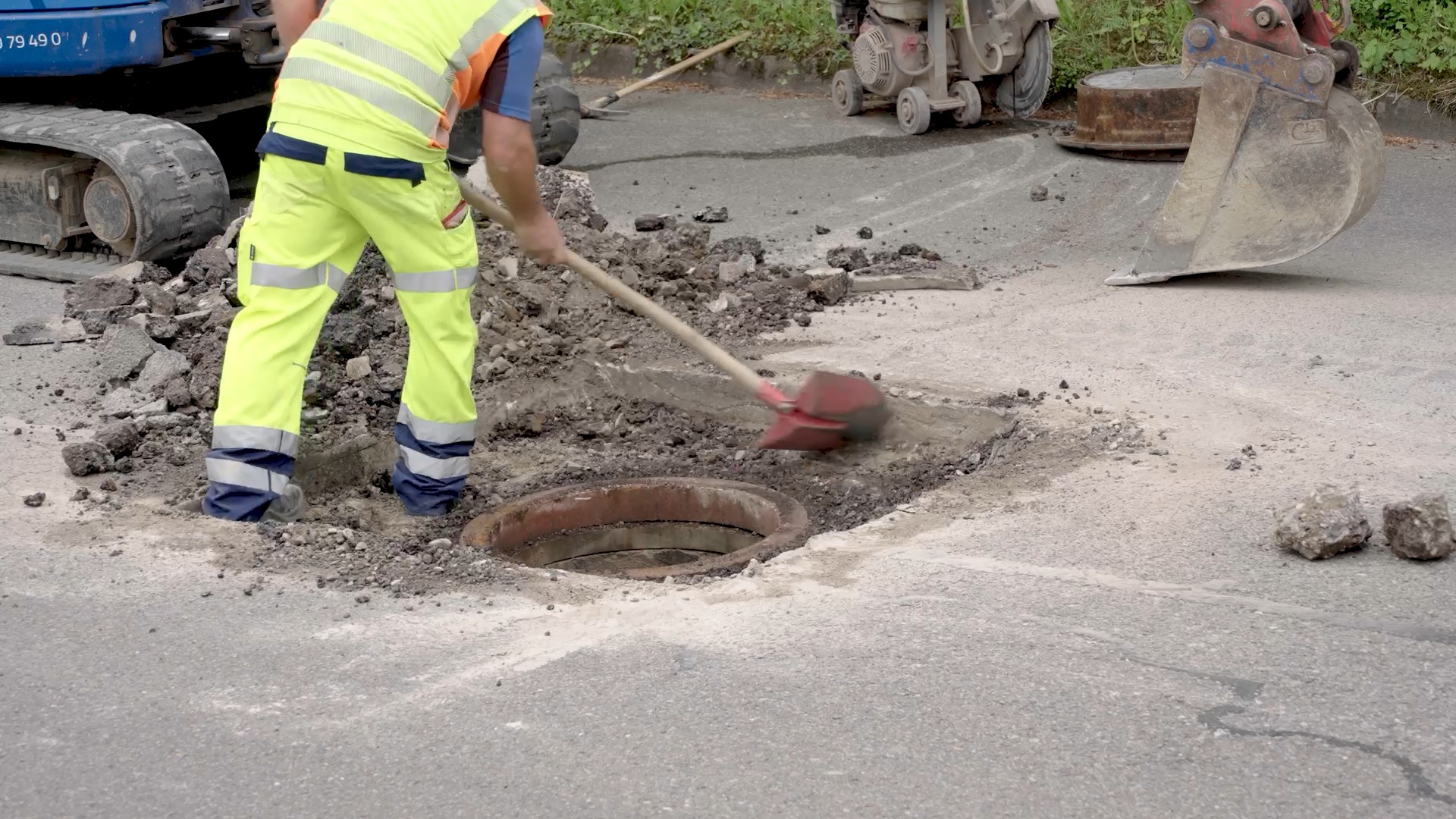
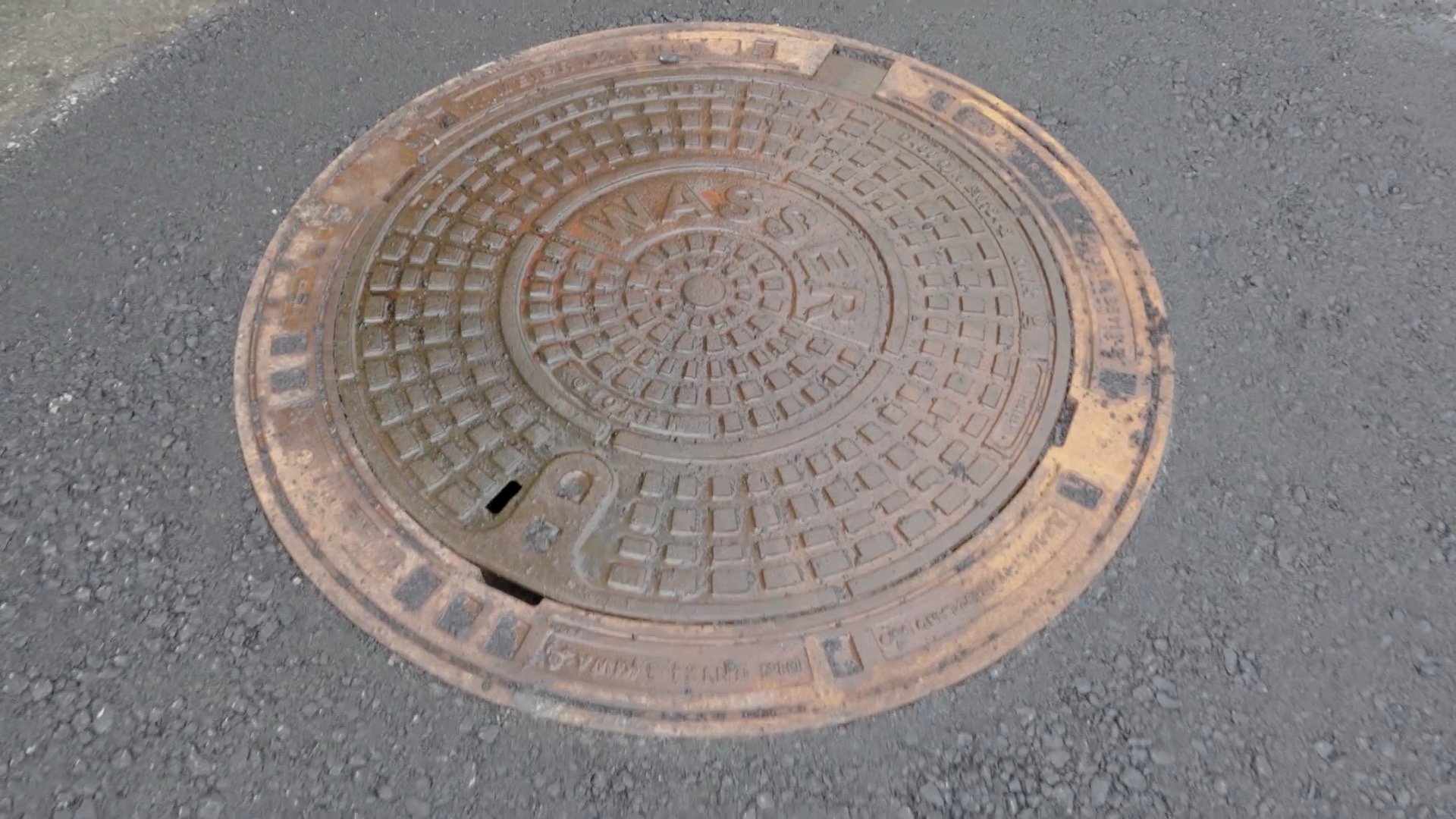
Professional installation of manholes

Practical explanation of installation

List Stars

18 chapter videos
(Theory and Practical Parts)

Bullseye

Ideal for site managers and employees in asphalt, road or civil engineering with prior knowledge

Translate

Available in the
following languages:

Deutsch Flagge Englische Flagge Polnische Flagge Portugiesische Flagge Französische Flagge Italienische Flagge Spanische Flagge
Stopwatch

Total Duration:
approx. 3:06 hours

Please note

Our training courses have been translated into various languages with the support of modern AI tools. Despite the utmost care, small translation errors may occasionally creep in. If you notice anything, please let us know at info@splusmediaworks.com.
Thank you for your understanding!

The modules

In the modules, you will receive a thematic structure of the training content in the form of chapters. Each training course always starts with a theoretical part as an introduction and to impart basic knowledge. This is followed by the practical part, in which the asphalt construction experts, accompanied by moderator Chris Bollinger, explain the use of machines, the construction site process and many other topics step by step and with the necessary pinch of humour.

Chapter 1.1: Outlook and overview of topics

Chapter 1.1: Outlook and overview of topics

Chris Bollinger opens the training and welcomes you together with the first speaker: Sebastian Miesem from FAME. With over 20 years of experience, he offers a brief outlook on the future of asphalt construction. You’ll learn how sustainability, new materials, and innovative technologies are already shaping the industry – and what that means for your daily work. A compact introduction that makes you want to dive deeper.
Chapter 1.2: Temperature reduction in asphalt construction

Chapter 1.2: Temperature reduction in asphalt construction

This chapter focuses on the fine-tuning required for lowering paving temperatures in asphalt construction. You will learn why this adjustment affects not just the mixing plant, but also requires a shared understanding among all stakeholders – from contractors and site managers to clients. In addition to the technical aspects, it also looks at how specification documents and standard catalogs influence implementation.
Chapter 2.1: Bitumen testing

Chapter 2.1: Bitumen testing

This chapter focuses on bitumen testing. Bernhard Süss, owner of an independent materials testing institute, provides practical insights into various procedures for ensuring bitumen quality. Typical user questions are addressed and explained in an accessible way – ideal for gaining a solid understanding, even without prior knowledge.
Chapter 2.2: Test procedure

Chapter 2.2: Test procedure

This chapter focuses on rheological testing methods used to analyze the flow behavior of bitumen. Among other things, the dynamic shear rheometer (DSR) is introduced – a standard tool in bitumen testing since the 1990s. These fully automated systems deliver precise values for today’s requirements – offering a fascinating look into the science of flow.
Chapter 3.1: Preparation of the construction site

Chapter 3.1: Preparation of the construction site

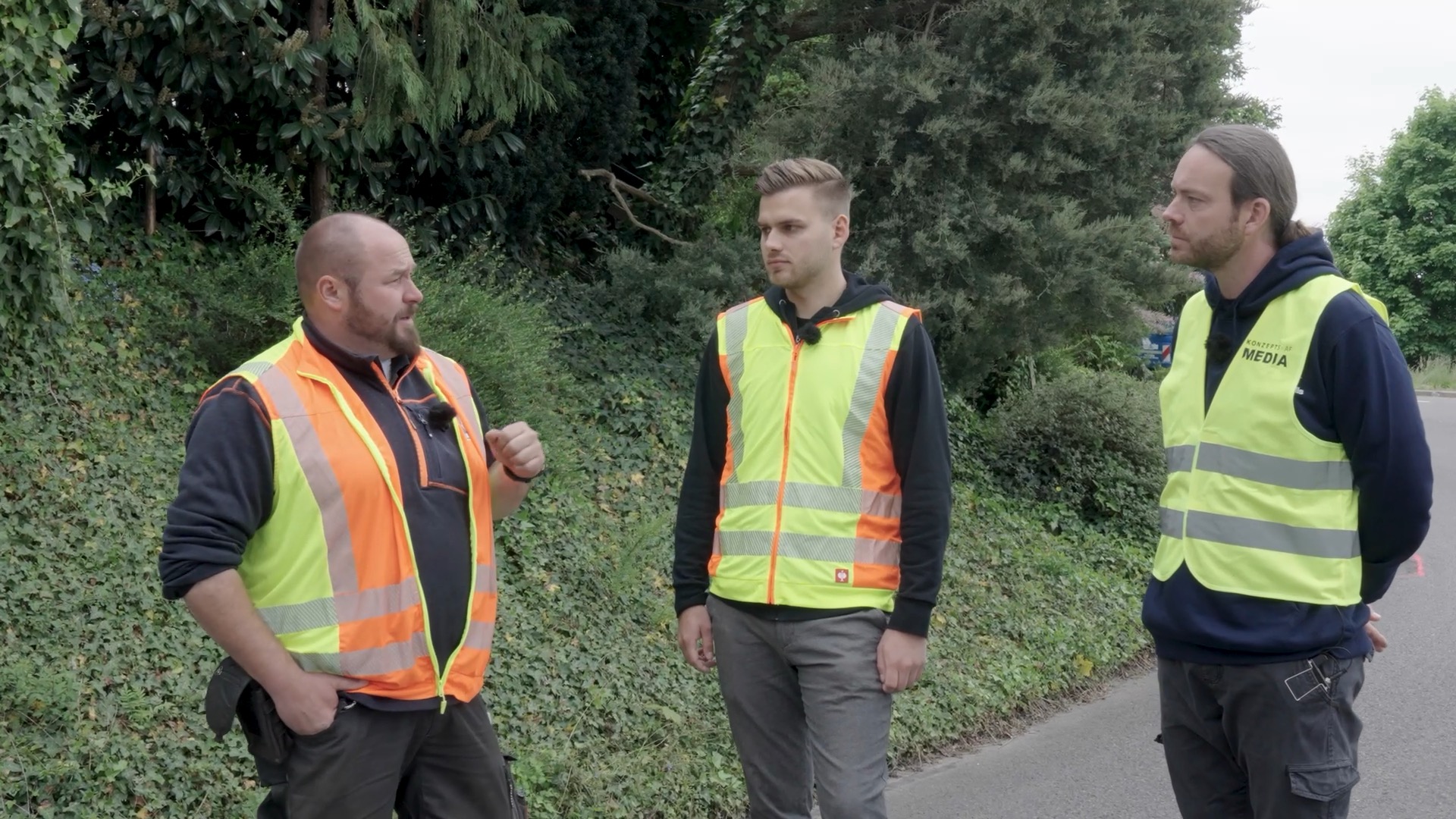
In this chapter, you will delve deeper into the practical aspects of asphalt construction. Together with a site manager and a foreman, you will learn how a construction site is professionally prepared – from planning fundamentals to on-site implementation. The experts provide practical insights into the organization, coordination, and workflows on the site before the actual asphalt paving begins.
Chapter 3.2: Personal protective equipment

Chapter 3.2: Personal protective equipment

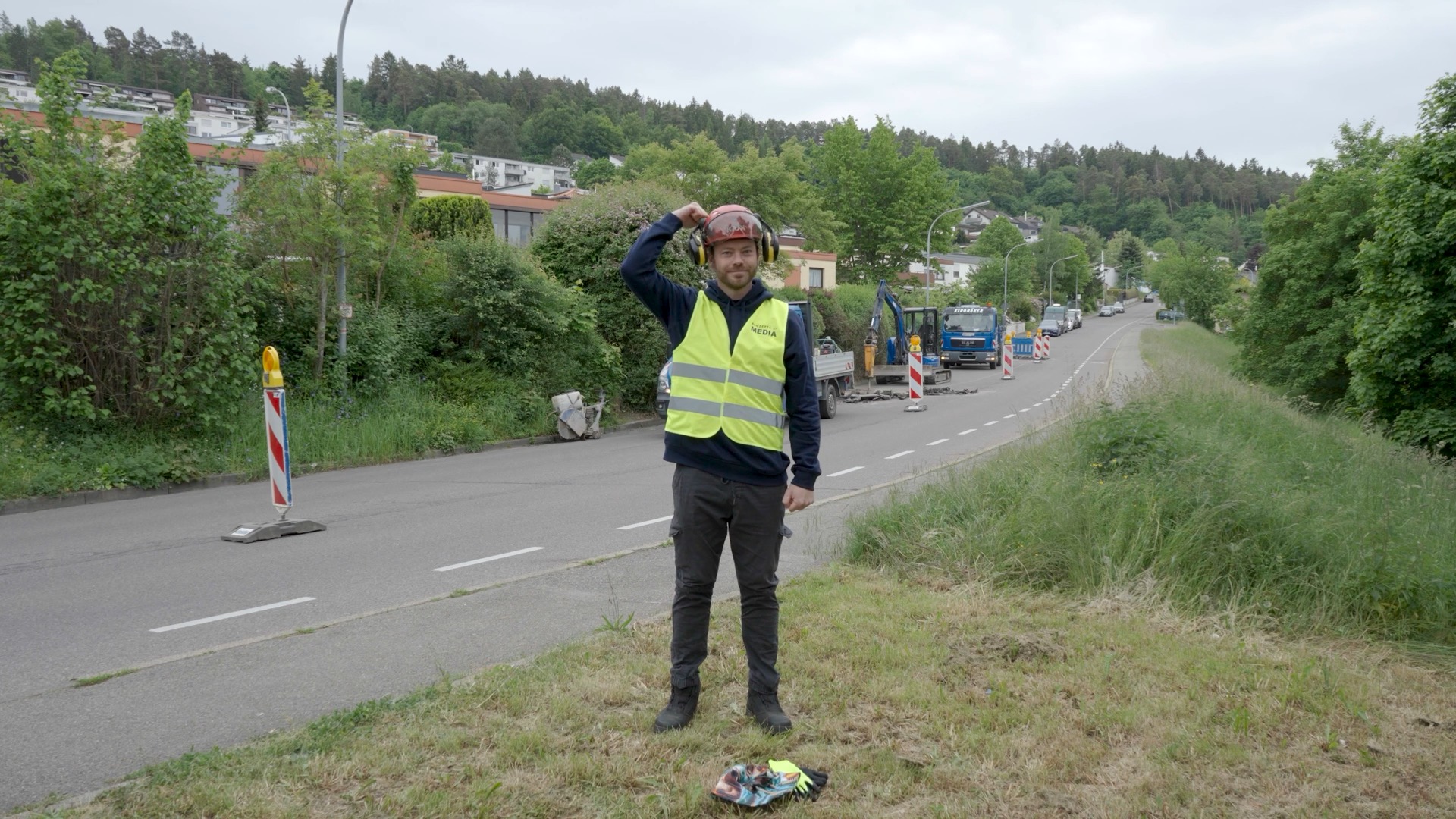
In this chapter, you will learn about the essential personal protective equipment (PPE) required for safe and proper work on a construction site – from safety shoes to helmet, hearing protection, and high-visibility clothing.
Chapter 3.3: Site visit

Chapter 3.3: Site visit

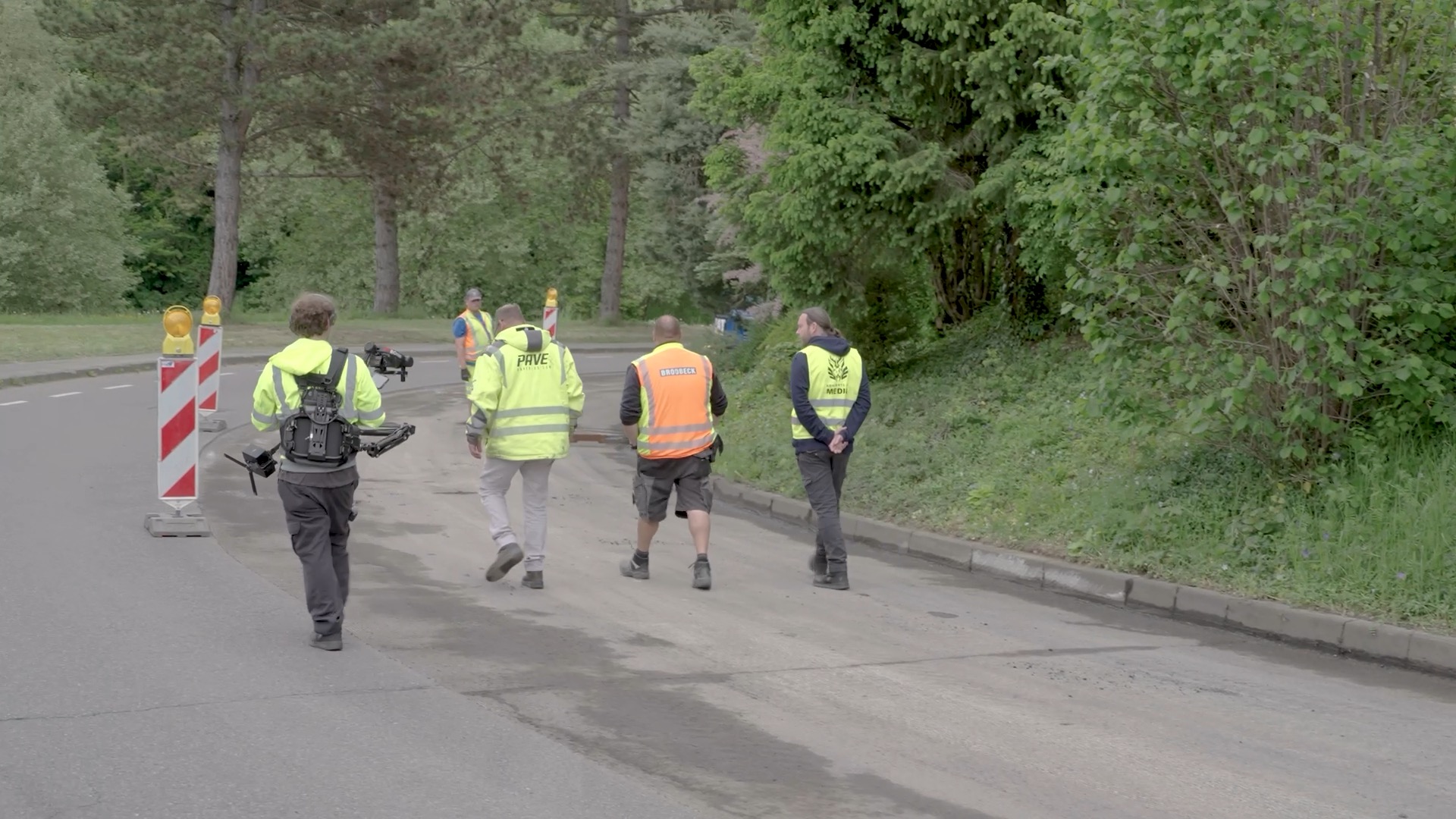
In this chapter, you will join the training team on a real construction site where the asphalt surface layer is being renewed. You will learn which types of damage require rehabilitation, how maintenance decisions are made, and why early intervention is economically beneficial. Practical examples highlight the link between surface damage and deeper structural issues.
Chapter 3.4: Rehabilitation of a manhole

Chapter 3.4: Rehabilitation of a manhole

In this chapter, you will follow the proper rehabilitation of a manhole – from removing damaged support rings to preparing for reinstallation with a new base layer. You will gain practical insights into each step of the process and learn how to flexibly respond to unforeseen conditions on-site.
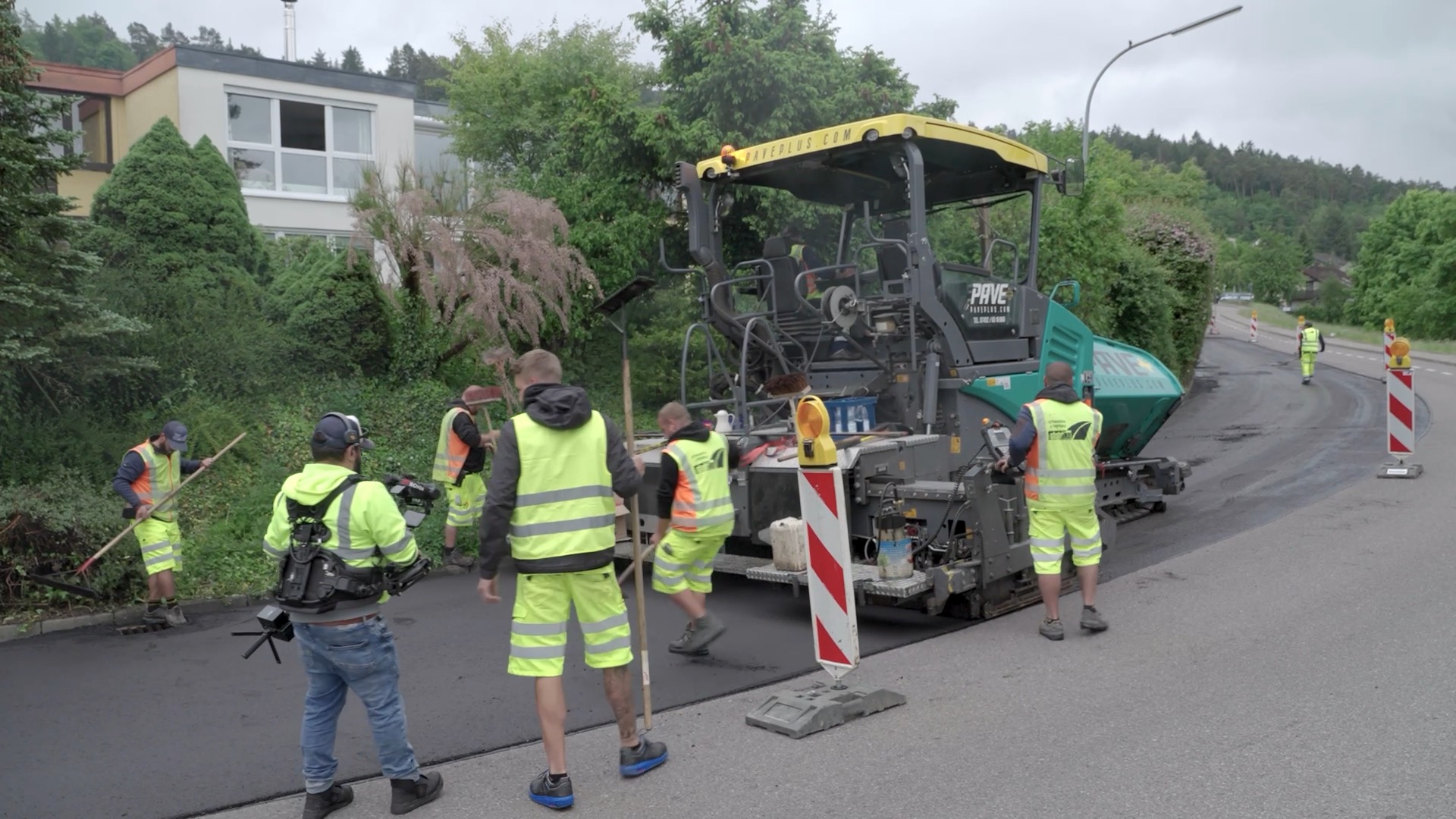
Chapter 4.1: Asphalt paving in practice

Chapter 4.1: Asphalt paving in practice

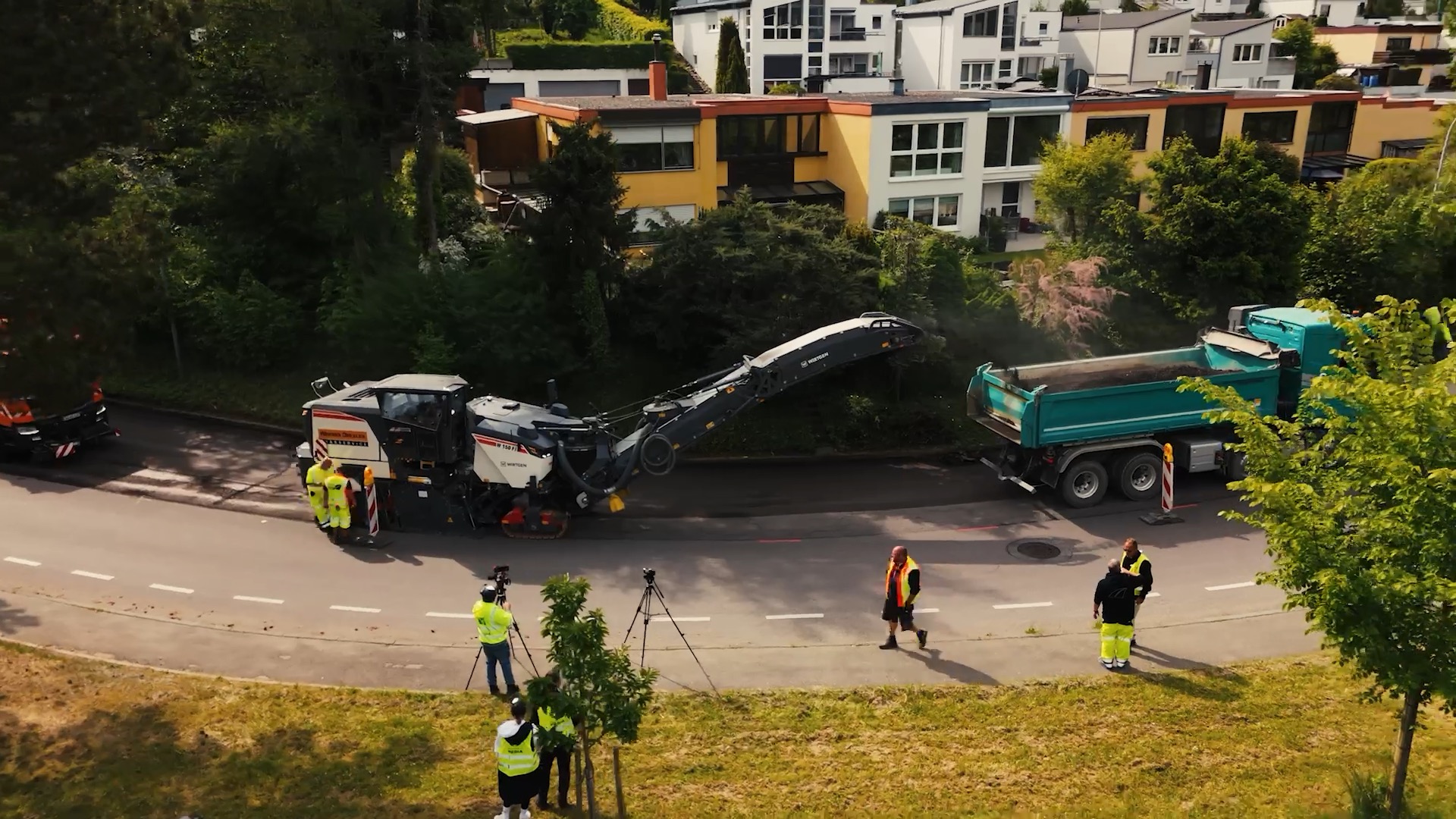
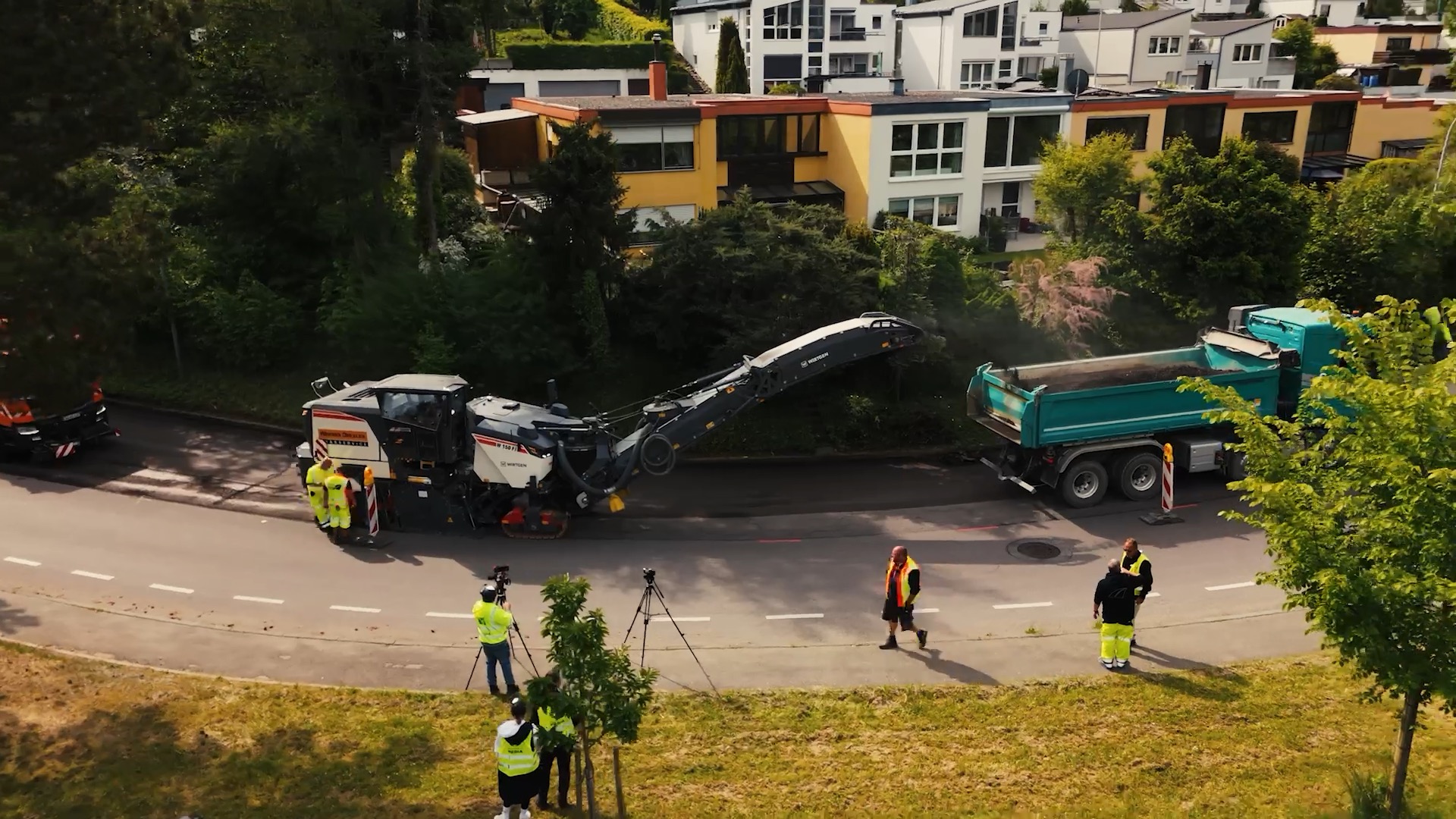
In this chapter, you join the team on the construction site at the start of a new workday. Experts demonstrate the proper milling of the surface layer using a modern asphalt milling machine and prepare everything for the installation of manholes and inlet shafts – a practical introduction to the next steps in asphalt construction.
Chapter 4.2: Steps prior to asphalt paving

Chapter 4.2: Steps prior to asphalt paving

This chapter focuses on the precise milling process as the foundation for the subsequent asphalt paving. You will learn how the desired installation depth of four centimeters is achieved, the importance of edge treatment, and why a clean, level milled surface is critical for the quality of the top layer. Professional milling means accuracy, clean edges, and optimal preparation for the next construction phase.
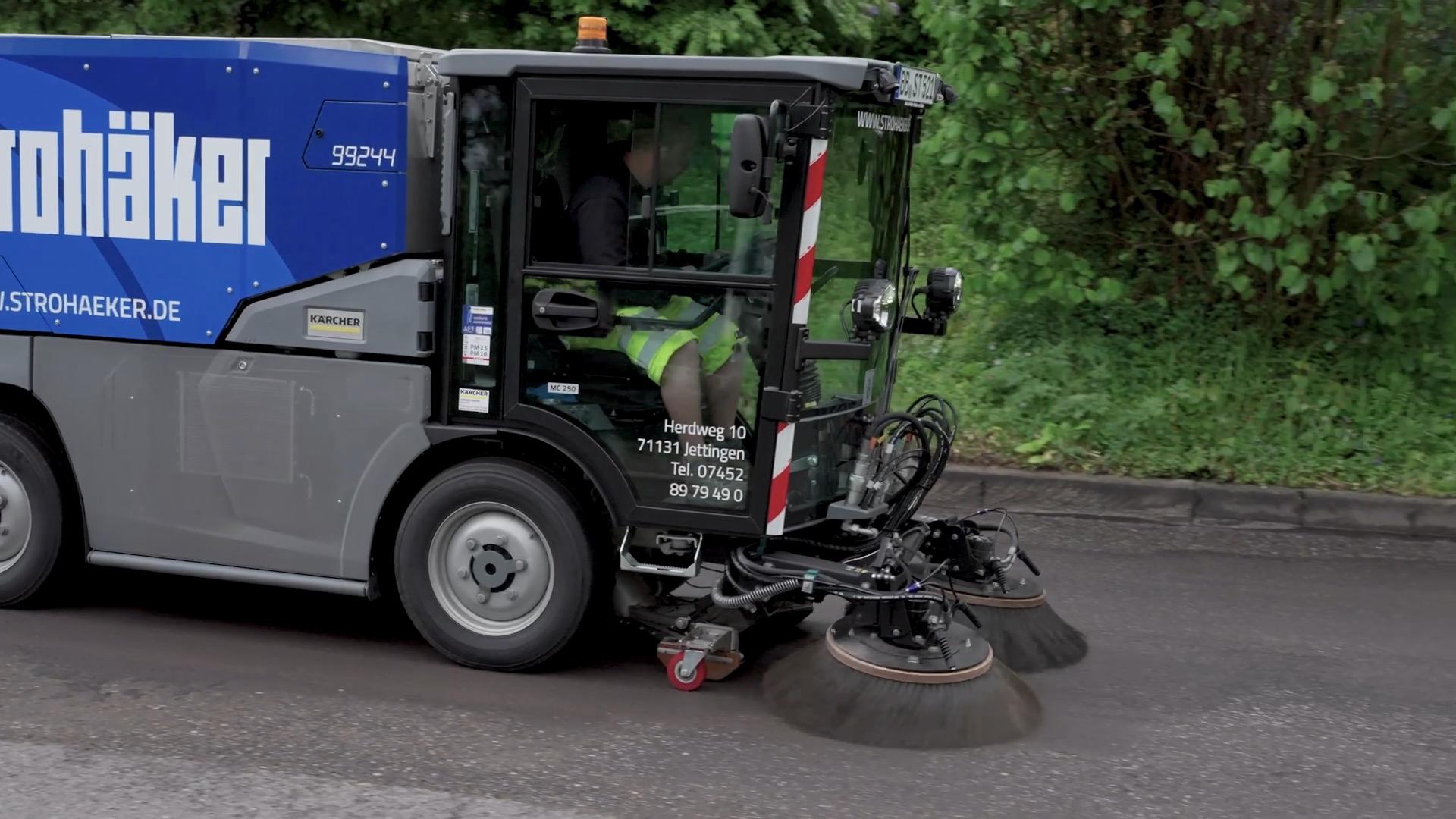
Chapter 4.3: Cleaning the milled surface

Chapter 4.3: Cleaning the milled surface

After milling, the remaining base layer becomes visible. This chapter shows the importance of thoroughly cleaning the milled surface – first with mechanical sweeping, then with high-pressure washing. The goal is a dust-free, clean surface to ensure proper adhesion of the tack coat. This creates a strong bond with the new surface layer.
Chapter 4.4: Setting manholes

Chapter 4.4: Setting manholes

This chapter demonstrates how manholes are professionally positioned and integrated with asphalt. The base layer is applied, and each step – from preparation to manhole covering – is explained in a practical context. It clearly highlights the importance of coordination, timing, and flexibility on the construction site.
Chapter 5.1: Preparation for paving

Chapter 5.1: Preparation for paving

Before the actual paving begins, the focus is again on cleaning the road surface. After overnight rain, the previously cleaned area is cleared once more of leaves and debris. Then, a so-called TOK tape is welded on – a sealing layer between the asphalt and adjacent structures. Proper preparation lays the foundation for a clean and durable installation.
Chapter 5.2: Spray truck

Chapter 5.2: Spray truck

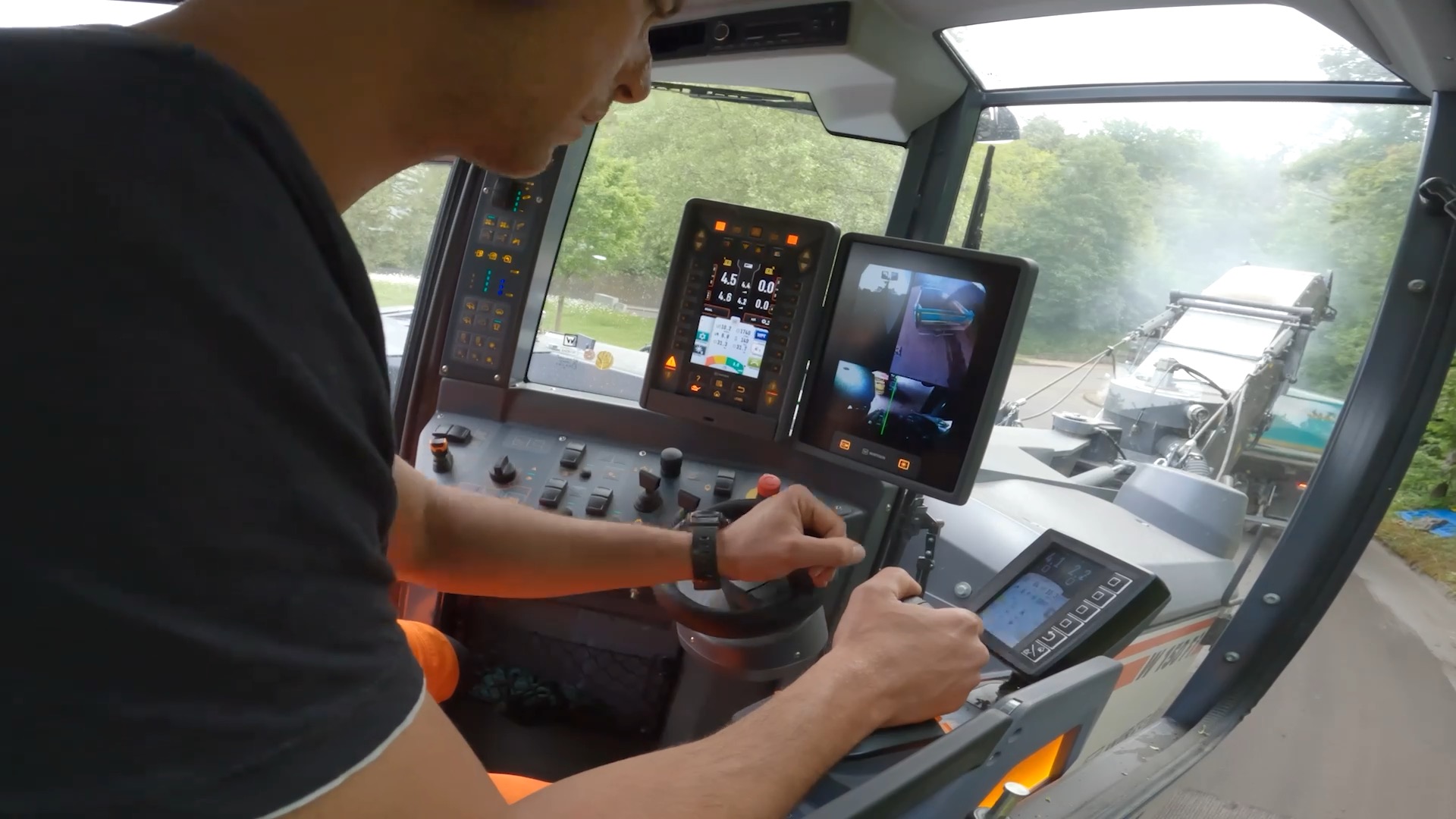
This chapter introduces the spray truck – a special machine for the even application of tack coat before asphalt paving. You will learn how the machine works, how the driver operates the spray bar via the control panel, and what to consider regarding temperature, dosage, and coverage. The goal is a uniform adhesive layer that ensures a stable bond between asphalt layers.
Chapter 5.3: Preparing the paver

Chapter 5.3: Preparing the paver

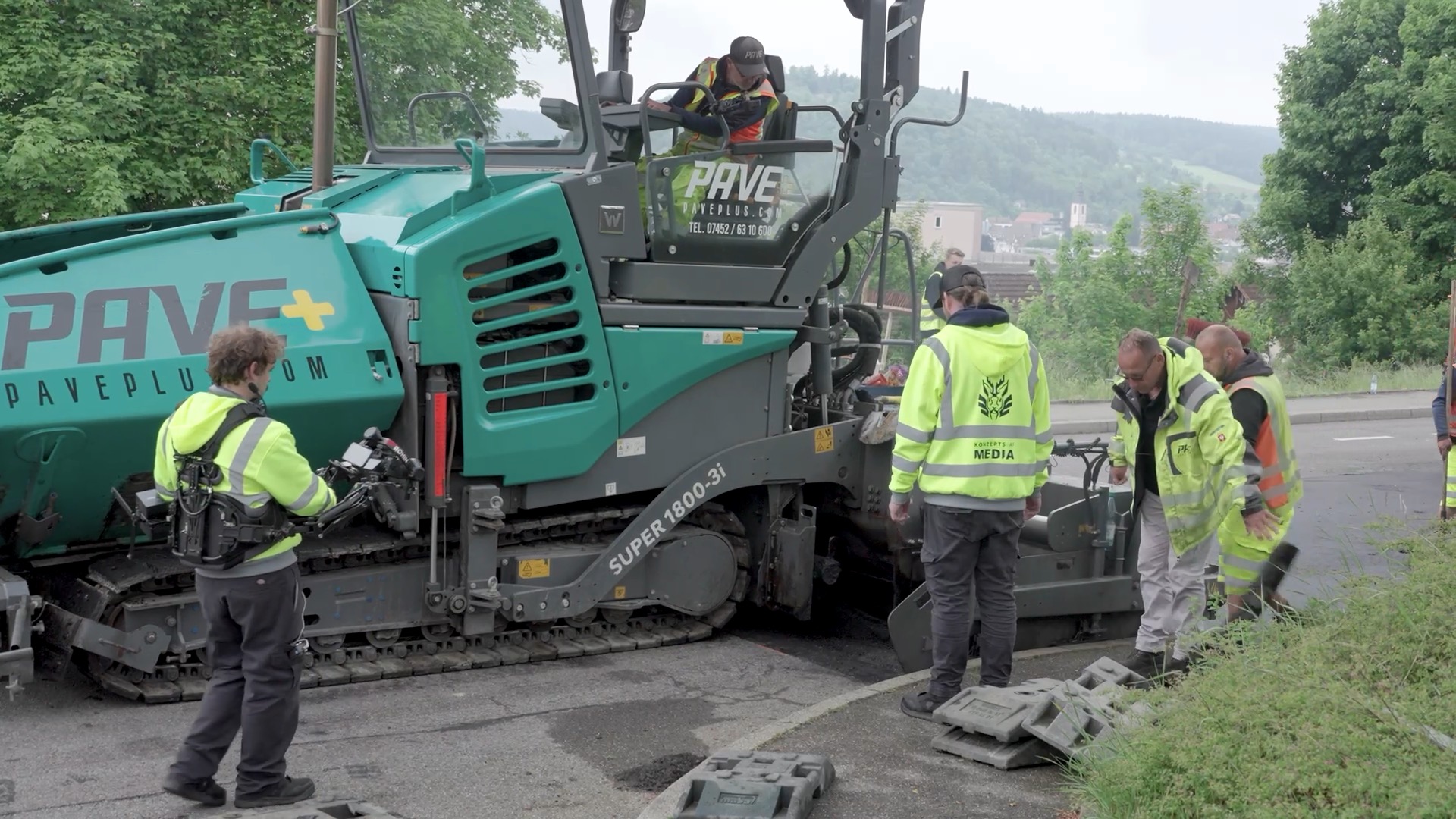
In this chapter, the team prepares the paver for use. The screed is treated with a separating agent to ensure it is clean and leaves a neat paving pattern. Although the machine arrives cleaned, dirt can still accumulate during unloading, which must be removed before starting. The paver is also driven in reverse onto the site to protect sensitive areas like the TOK band.
Chapter 5.4: Compacting the asphalt

Chapter 5.4: Compacting the asphalt

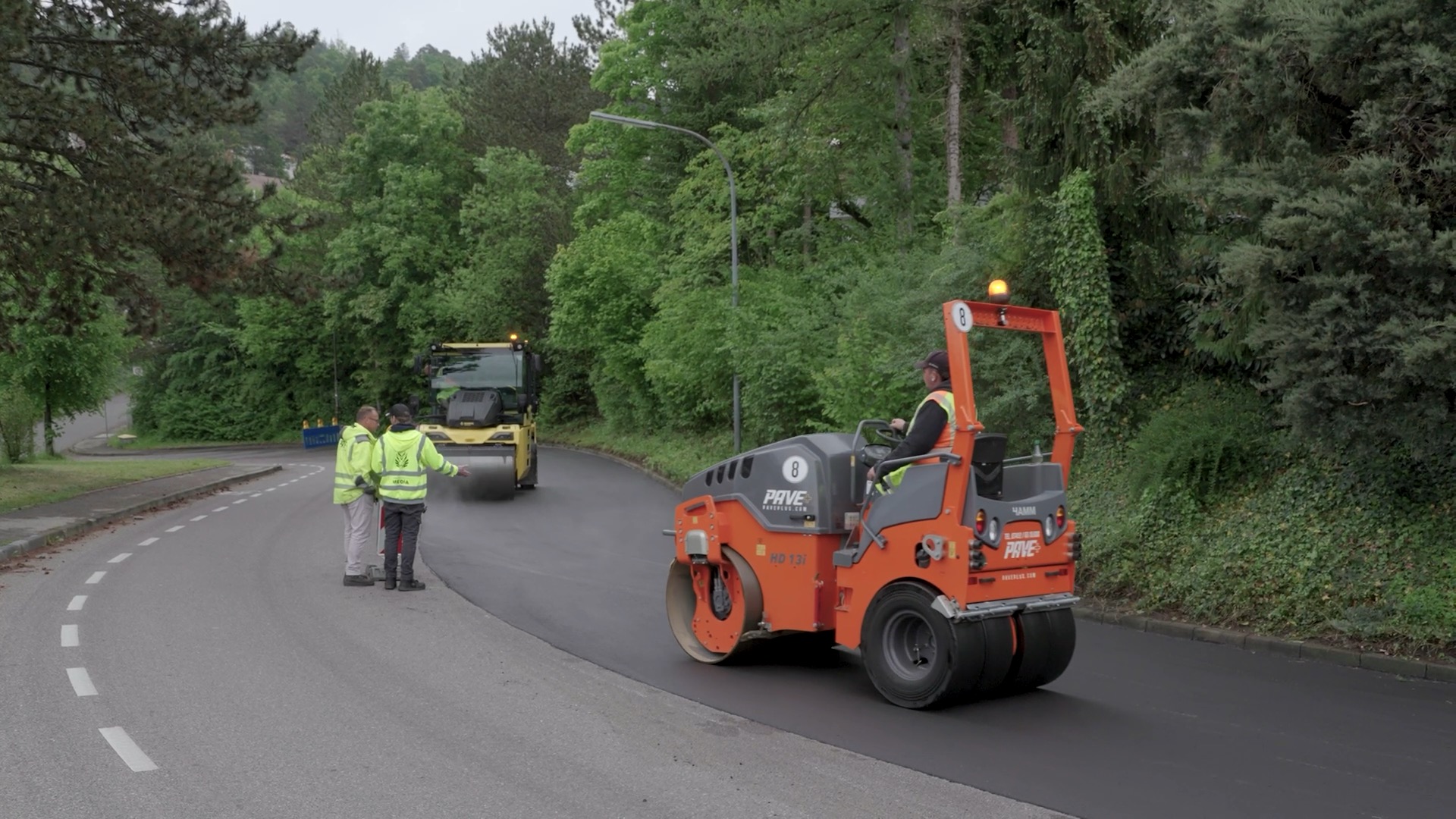
This chapter focuses on the final compaction of the asphalt. You will learn how two different rollers work together, and how they differ in terms of drum width, weight, and features like the integrated Asphalt Manager. A hands-on demonstration shows how coordinated compaction leads to optimal paving results.
Chapter 5.5: Fine grinding

Chapter 5.5: Fine grinding

We come to the final phase of the project, focusing on achieving clean edges, correct joint profiles, and a consistent surface finish. The importance of final compaction and small manual adjustments also becomes clear – offering insight into the precise finishing touches at the end of the project.
Chapter 5.6: Review

Chapter 5.6: Review

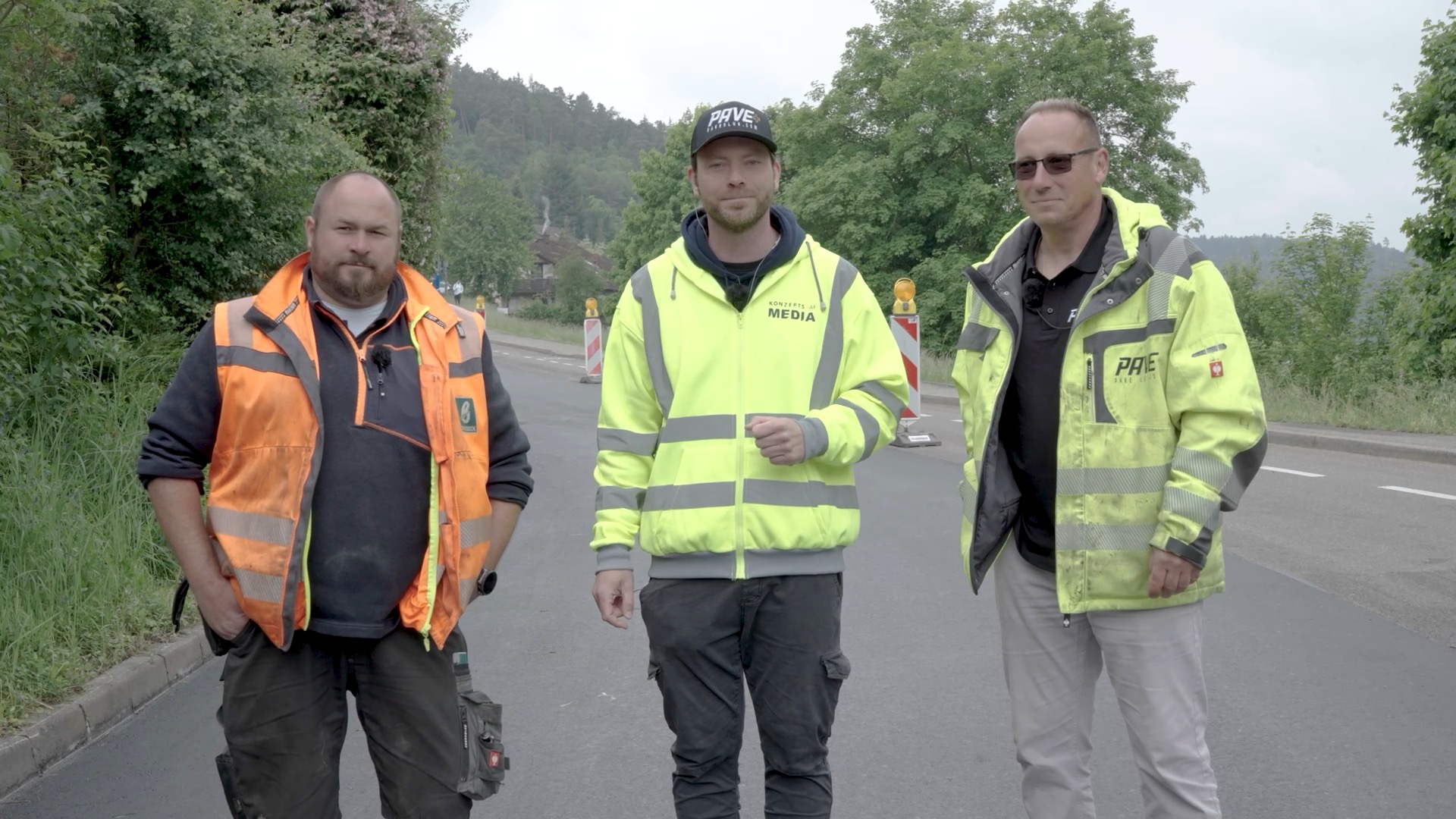
The asphalt is in place – the surface layer has been freshly laid and compacted. In the final moments, Holger Nopirakowski, Michael Digel, and Chris Bollinger reflect with satisfaction on the construction process: the result is convincing, and the collaboration between the mixing plant, machine team, and site organization worked smoothly. A strong team performance showcasing how seamlessly modern construction can operate.

Cookie Settings

We use cookies and similar technologies (e.g. tracking pixels) to analyse the use of our website, personalise content and offer social media functions. You can withdraw your consent at any time.

DE EN
Cookie consent by WebThinker

Individual Settings

Here you can specify in detail which services you wish to allow. Individual services can be enabled or disabled within each category.

DE EN
Cookie consent by WebThinker
Cookie Settings